Kimbap Recipe: Korean Rice Rolls With Carrot Oil in 7 Steps
🇰🇷 Korean Classic🍱 Lunch Box⏱ 50 Minutes🌶 Not Spicy
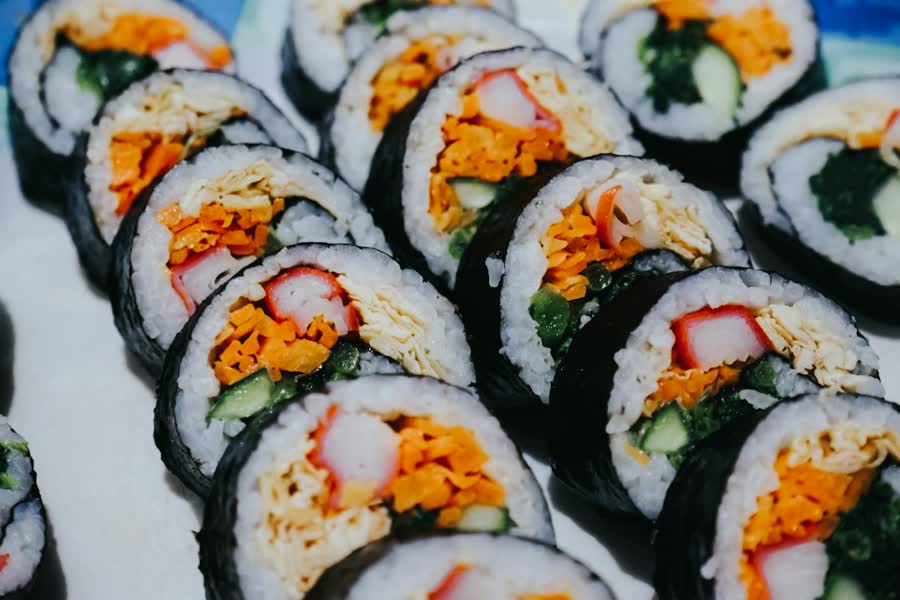
This kimbap recipe is the version Korean home cooks pull out when they want rolls that taste better than the ones from the shop on the corner. The secret is carrot oil: you fry a mountain of shredded carrot in generous oil, then cook the ham and the eggs in that same orange oil so every layer of the roll shares one deep, sweet-savory flavor. It makes 5 rolls in about 50 minutes, and every Korean ingredient below comes with a substitute you can find in a regular supermarket.
🛒 1. Ingredients (Makes 5 Rolls)
Everything is measured for 5 rolls, which is what one big pan of egg and one pan of carrot oil naturally produce. Halve the eggs and carrots if you only want two rolls, but keep the rice at 150g per sheet, no matter what.
| Ingredient | Amount | Notes & Substitutes |
|---|---|---|
| Cooked short-grain rice | 750g (5 cups) | Freshly cooked with 10% less water; a spoonful of black rice is optional |
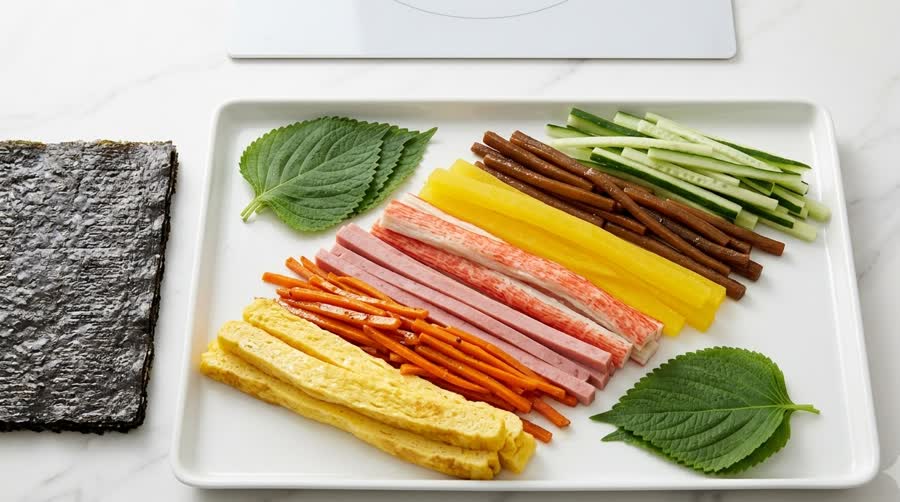
| Gim (Korean seaweed sheets) | 5 sheets | Full-size sushi nori works — see guide below 👇 |
| Carrots | 450g (3 large) | Cut into long, wide matchsticks on a mandoline |
| Cooking oil | 200ml (¾ cup + 1 Tbsp) | Neutral oil — canola, sunflower or grapeseed |
| Seasoned salt (matsogeum) | 3 tsp total | 1 tsp carrots · ½ tsp eggs · 1½ tsp rice — see guide below 👇 |
| Eggs | 13 (or 8 for a 20cm pan) | Yes, thirteen — for one thick, cake-like egg sheet |
| Bulgogi-flavored kimbap ham | 200g (7 oz) | Pre-cut sticks; any ham or luncheon meat works — see guide below 👇 |
| Cucumbers | 2 | Thinly sliced, then pickled with sugar 1 Tbsp + vinegar 1 Tbsp |
| Danmuji (yellow pickled radish) | 5 strips | Often sold as a kimbap set with burdock — see guide below 👇 |
| Braised burdock (ueong-jorim) | 5 strips | Sweet-soy root strips (optional) — see guide below 👇 |
| Imitation crab sticks | 5 | One per roll; skip for a meat-free version |
| Sesame oil | 3 Tbsp + extra | Most goes into the rice; the rest brushes the rolls and the knife |
| Toasted sesame seeds · perilla leaves | — | Seeds for the rice; perilla (optional) adds a minty edge |
🧂 2. Can’t Find Korean Ingredients?
No Korean market nearby? Here is what each ingredient tastes like, what to use instead, and the one thing you should not buy by mistake.
🌊 Gim (Korean seaweed sheets)
Roasted seaweed with a clean, ocean-sweet flavor. It is the wrapper that holds everything together, and its rough side is the side the rice sticks to.
✅ Substitute: full-size sushi nori sheets, shiny side down. They are nearly identical.
⚠️ Don’t buy: seasoned snack gim. Those small oiled, salted sheets crack the moment you roll them and turn the whole roll greasy.
🧂 Matsogeum (Korean seasoned salt)
Fine refined salt with a small amount of umami seasoning mixed in. It dissolves instantly and rounds out the rice without making it taste salty, which is exactly why Korean kimbap shops use it.
✅ Substitute: fine sea salt in the same amount plus a tiny pinch of sugar, or fine salt with a drop of MSG if you keep it.
⚠️ Don’t buy: coarse or flaky salt for the rice. It takes too long to dissolve and leaves salty pockets in some bites and none in others.
🥓 Bulgogi-flavored kimbap ham
Long sticks of ham seasoned with a sweet, smoky bulgogi marinade. Korean home cooks prefer it over plain ham because it brings its own seasoning into the roll.
✅ Substitute: any deli ham or canned luncheon meat cut into finger-width sticks, tossed with ½ tsp soy sauce and ½ tsp sugar before frying.
⚠️ Don’t buy: honey-glazed or wafer-thin sandwich ham. It shreds when fried and disappears inside the rice.
🌿 Danmuji & braised burdock (the kimbap set)
Danmuji is bright yellow pickled radish, sweet and crunchy. Braised burdock is a soy-glazed root strip, earthy and chewy, a little like sweet teriyaki parsnip. In Korea they are sold together in one vacuum pack labeled for kimbap.
✅ Substitute: Japanese takuan for the radish. For burdock, simmer parsnip or carrot sticks in soy sauce 2 parts + sugar 1 part for 10 minutes, or simply skip it — the carrot oil carries the flavor.
⚠️ Don’t buy: raw burdock root unless you plan to braise it yourself. Straight from the ground it is woody and bitter.
🍳 3. Kimbap Recipe — Step-by-Step Instructions
The order matters in this kimbap recipe: the carrots go first because everything else is cooked in the oil they leave behind. Get all the fillings cooked, cooled and lined up on one tray before you touch the seaweed — rolling goes fast once you start.
STEP 1🥕 Make the carrot oil
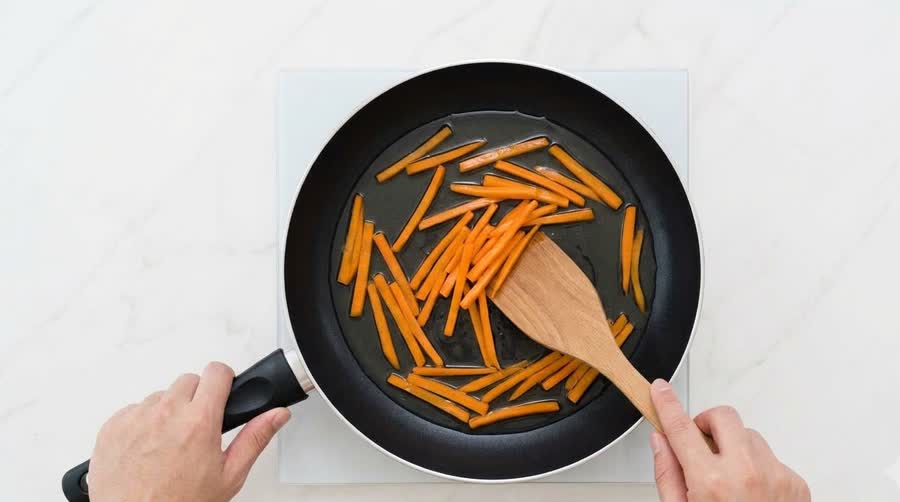
Slice the carrots into long, wide matchsticks — a mandoline with a julienne blade is fastest. Pour cooking oil 200ml into a wide pan over medium heat. It will look like far too much oil, and that is the point: you are shallow-frying the carrots, not sautéing them. Add the carrots and seasoned salt 1 tsp and fry, stirring, until the carrots go limp and sweet and the oil turns a deep orange.
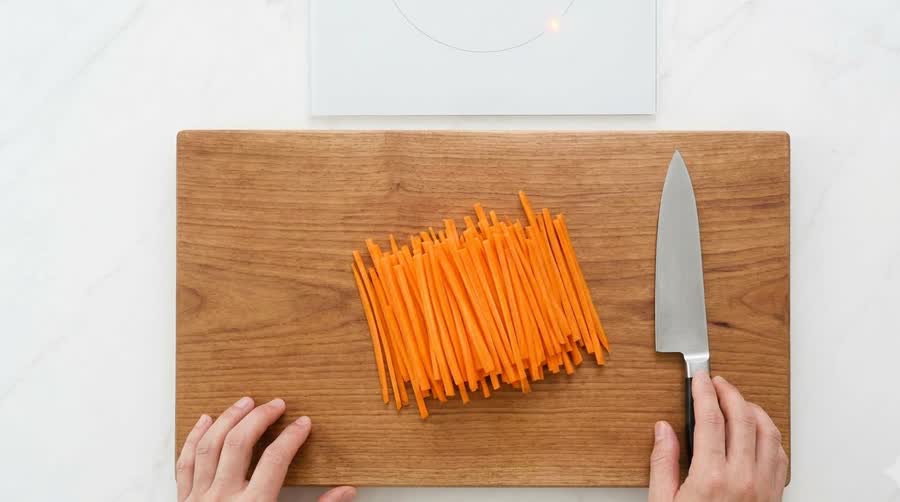
Lift the carrots out with a slotted spoon and spread them on a plate to cool. Do not throw the oil away. That orange carrot oil is now a flavored oil, and the next two steps are cooked in it. Salting the carrots while they fry is not optional either — in a good roll every single filling is seasoned to the same level, so no one ingredient stands out.
STEP 2🥓 Fry the ham in the carrot oil
Leave about a third of the carrot oil in the pan and pour the rest into a small bowl for the eggs. Add the ham sticks and fry over medium heat until the edges turn golden and lightly crisp, about 3 minutes. Frying the ham instead of using it straight from the pack deepens the savoriness and keeps the roll from tasting watery. Set the ham on the tray next to the carrots.
STEP 3🥚 Cook one thick, cake-like egg sheet
Crack the eggs 13 into a bowl, add seasoned salt ½ tsp and beat well. Salt in the egg is a must — an unseasoned egg layer is the most common reason homemade kimbap tastes flat. Pour the reserved carrot oil back into the wide pan over low heat and pour in all of the egg at once.
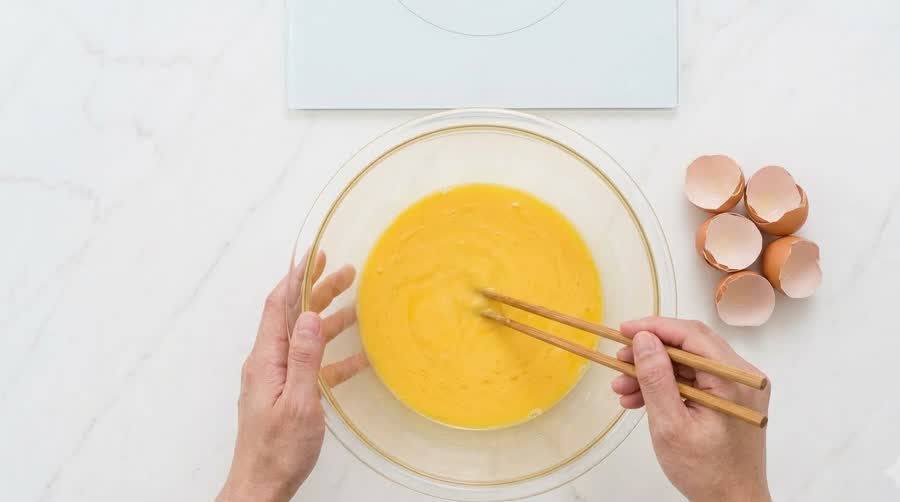
Cover with a lid and cook on low heat until the egg sets into one thick, fluffy sheet — it should look like a pale yellow castella cake, about 2cm tall. The lid is the trick: steam cooks the top without browning the bottom. Slide it onto a board, cool for a few minutes, then cut into long finger-width strips.
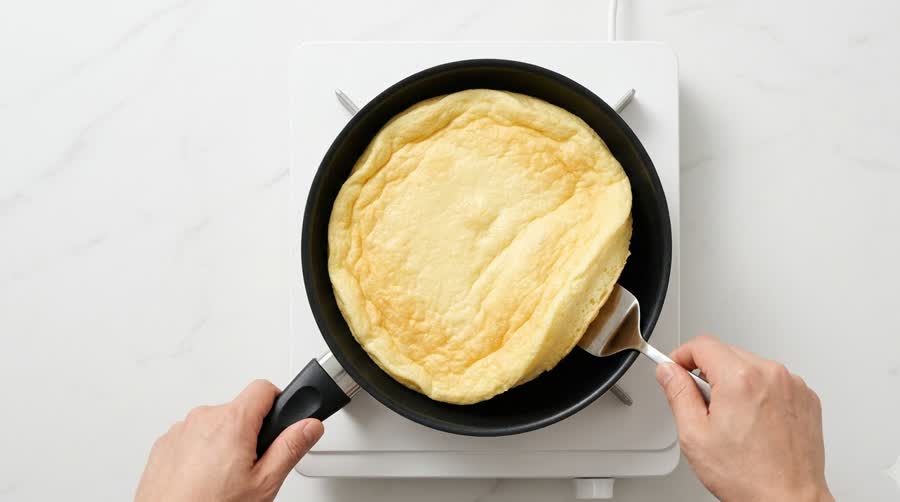
Why so thick? Most kimbap shops use a thin omelette rolled several times. This kimbap recipe goes the other way — one thick slab you cut into bars — because a chunky egg strip gives the roll a soft, sweet center that thin egg simply cannot. It also saves you the fiddly rolling and stacking.
STEP 4🥒 Quick-pickle the cucumbers
Cut the cucumbers into thin matchsticks, toss with sugar 1 Tbsp, vinegar 1 Tbsp and a pinch of seasoned salt, and let them sit for 10 minutes. This is the same way Koreans prep cucumber for egg salad, and here it replaces the spinach that traditional kimbap calls for. Blanching, rinsing and squeezing spinach is a whole separate job; the cucumber pickle takes two minutes and tastes fresher.
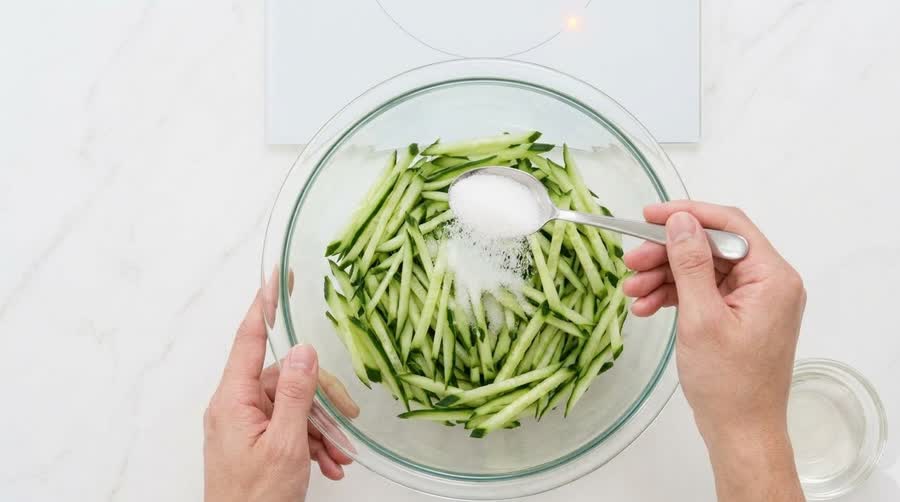
Squeeze the cucumber hard in your fist before it goes into the roll. Moisture is the number one reason kimbap falls apart, so the slices should feel almost dry.
STEP 5🍚 Season the rice — generously
Kimbap means seaweed rice, and the rice really does do most of the work. Cook it fresh with 10% less water than usual so the grains stay separate. While it is still hot, add sesame oil 3 Tbsp, seasoned salt 1½ tsp and a spoonful of sesame seeds, and fold with a cutting motion so the grains stay whole.
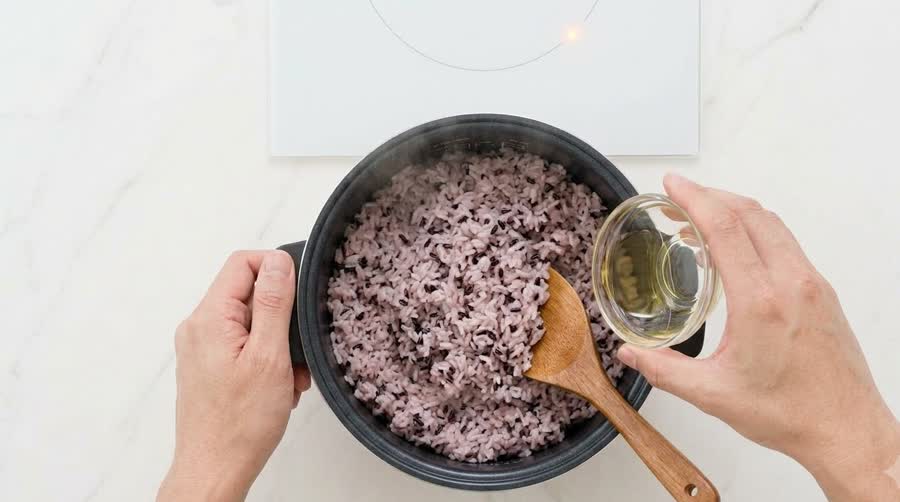
Taste a spoonful on its own. The rice alone should taste like a finished dish — noticeably seasoned, glossy with sesame. If it tastes bland now, the whole roll will taste bland, because the fillings are only accents. Add more salt than feels reasonable, then let the rice cool until it is just warm to the touch.
STEP 6🍙 Weigh, spread, fill and roll
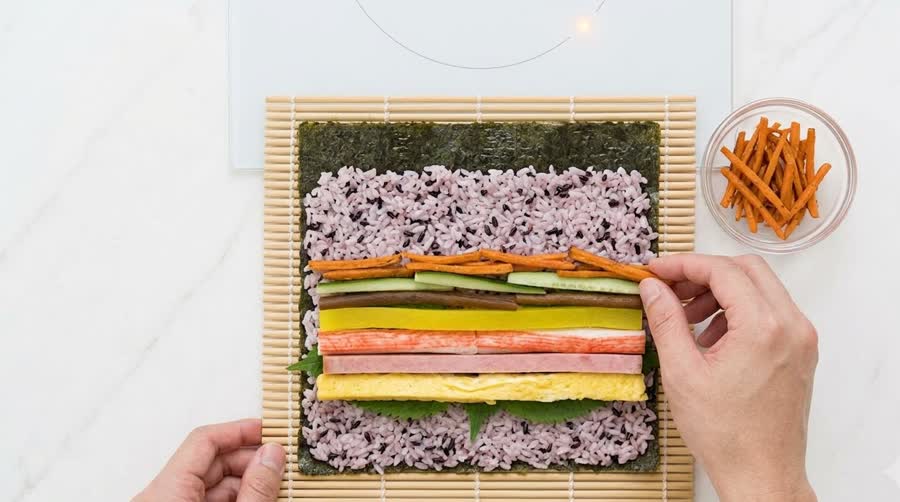
Lay a sheet of seaweed rough side up on a piece of foil or parchment (a bamboo mat is fine, but you do not need one). Weigh out rice 150g — the size of a tennis ball — and press it into a thin, even layer that covers the sheet except for a 3cm strip at the far end. Most home cooks pile on closer to 200g without noticing, and that is why their rolls burst and taste of nothing but rice.

Line up the fillings across the center: egg, carrots, ham, cucumber, danmuji, burdock, a crab stick and a perilla leaf if you are using one. Lift the near edge and fold it over the fillings, then press down firmly once so the first turn grips the filling.
Roll forward in one smooth motion, keeping the foil taut so the roll stays round and tight. Do not squeeze it again and again — one firm pass is what keeps the rice fluffy instead of packed.
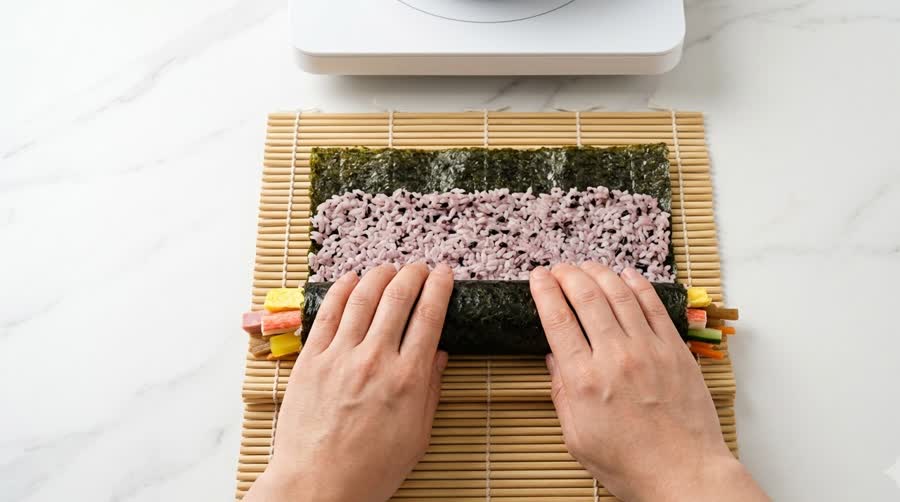
Dab water along the bare strip of seaweed with a fingertip, press the seam closed, and rest the roll seam side down for a minute so it sets before slicing.
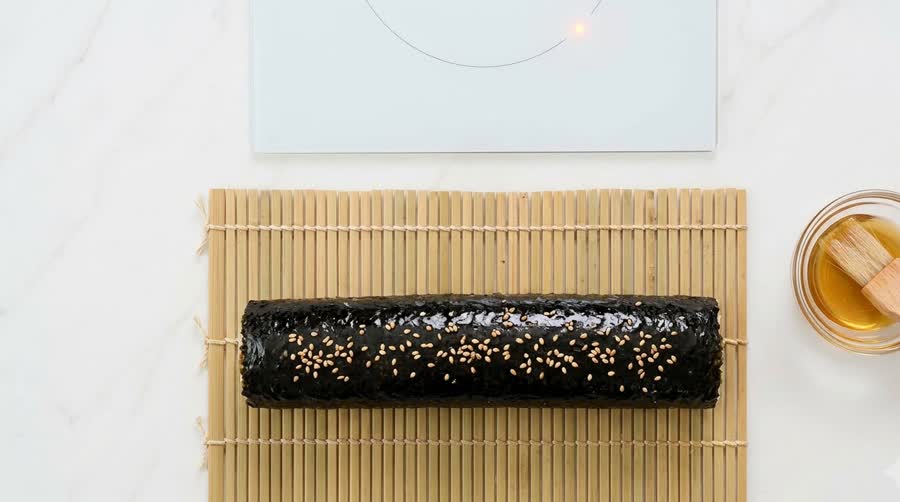
STEP 7✨ Brush, sprinkle, slice
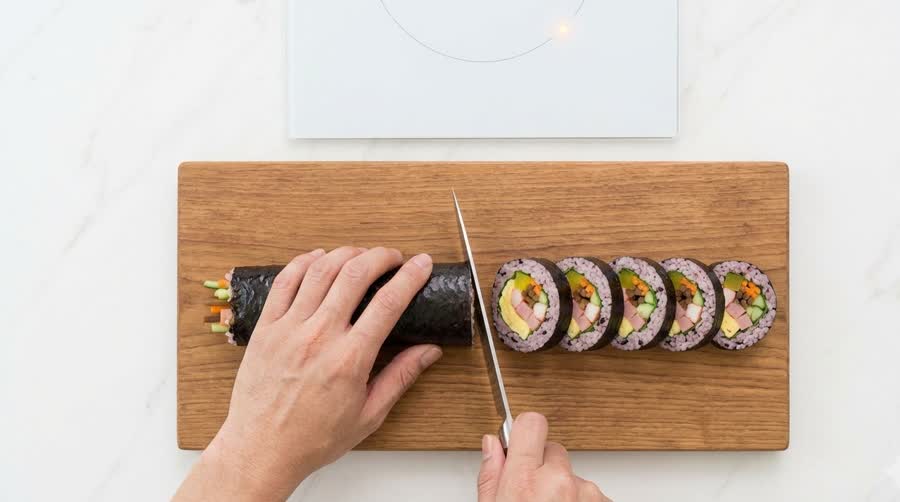
Brush each roll with a thin coat of sesame oil and scatter toasted sesame seeds over the top. Wipe your knife with a little sesame oil and slice into pieces about 1.5cm thick, cleaning the blade between rolls. A slick, clean knife is the difference between neat coins and squashed rolls.
💡 4. Tips for Success
These are the details that separate shop-quality kimbap from the rolls that fall apart on the picnic blanket. None of them add time; all of them add flavor.
✔ Stand the sheet tall or lay it wide — it changes the roll. Place the seaweed with its short side facing you and you get more wraps of seaweed around the filling, so the roll never bursts. Lay it with the long side facing you and each roll uses less sheet, which squeezes one extra roll out of the same rice — but it is easier to tear. Beginners: tall. Hungry: wide.
✔ Fresh rice only. Kimbap made with yesterday’s rice is kimbap nobody eats. Cook a fresh pot, and if you like a nuttier flavor add a spoonful of black rice to the pot — just a spoonful, because too much turns the rice faintly sour.
✔ Roll once, firmly, and stop. Korean short-grain rice is sticky. If you keep squeezing and re-rolling on a mat, the grains crush together and the roll turns into a dense rice brick. One confident pass with the first turn pressed tight is all it needs, which is why foil works just as well as bamboo.
✔ Every filling should taste seasoned. Think of it as layers of flavor: the carrots are salted, the ham is fried, the egg is salted, the rice is seasoned. When one filling is bland and another is loud, you taste the loud one and nothing else.
✔ Read the code on Korean eggs. Every Korean egg is stamped with a code, and the last digit tells you how the hen was raised: 1 is free-range outdoors, 2 is cage-free in a barn, 3 and 4 are cages. Lower is better. If your local eggs carry a similar welfare label, the same logic applies — thirteen eggs deserve a good number.
🥡 5. Storage & Reheating
Kimbap is best within a few hours of rolling, while the seaweed is still crisp and the rice is soft. Keep whole rolls wrapped tightly in foil at cool room temperature for up to 6 hours — this is picnic food, and it was designed to travel.
Refrigeration hardens the rice, so if you must chill leftovers, revive them the Korean way: dip cold slices in beaten egg and pan-fry until golden on both sides. Day-old kimbap fried in egg is a beloved dish in its own right, and many people prefer it. Freezing is not recommended — the seaweed goes leathery and the cucumber weeps.
🍚 6. What to Serve With
A roll from this kimbap recipe is a complete meal in one bite, but Koreans rarely eat kimbap on its own. The classic partners are all things you can dip a slice into:
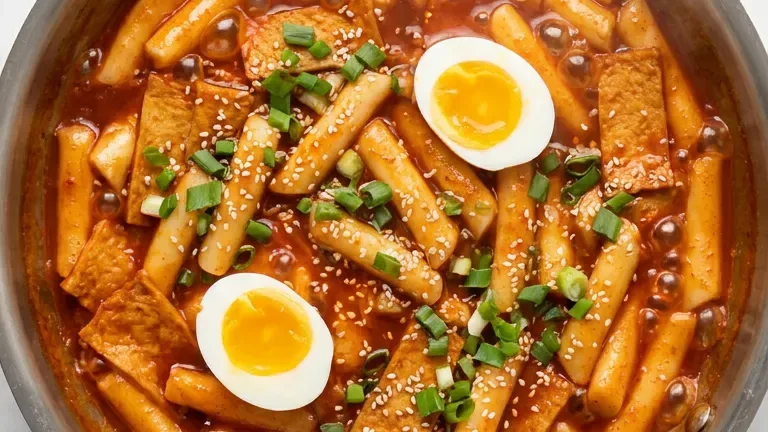
- Tteokbokki — spicy rice cakes are the street-stall pairing; dunk the kimbap in the red sauce. Here is our tteokbokki recipe 🌶
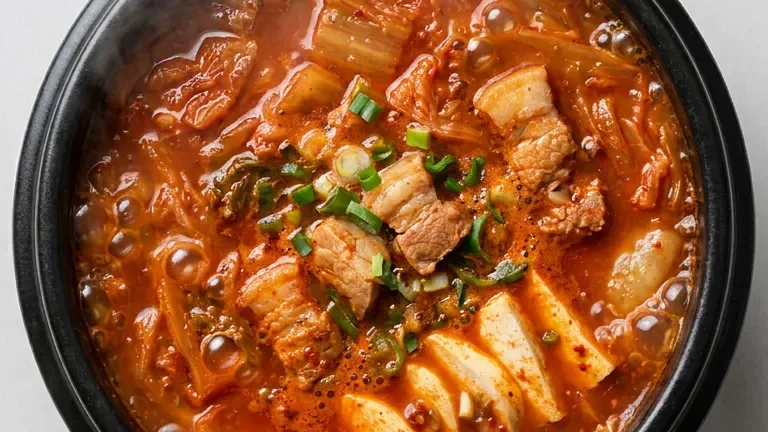
- Kimchi jjigae — a hot, sour stew against cool rolls is the lunch-box classic. Try our kimchi jjigae recipe 🍲
- Miso or soybean paste soup — a light broth to sip between bites 🥣
- Bulgogi — when kimbap is the side and not the main. Our bulgogi recipe takes 20 minutes 🥩
❓ 7. FAQ
❓ What is the difference between this kimbap recipe and sushi?
Kimbap seasons the rice with sesame oil and salt instead of sushi vinegar, uses fully cooked fillings, and is eaten as an everyday meal — no raw fish and no soy sauce for dipping. Sushi rice is tangy; kimbap rice is nutty and savory.
❓ Why does this kimbap recipe use 13 eggs?
The eggs cook into one thick, cake-like sheet across a wide pan, then get cut into bars for all 5 rolls. Thick egg is the signature of this style. If your pan is 20cm across, 8 eggs give the same height.
❓ Can I make kimbap without a bamboo mat?
Yes — this kimbap recipe is rolled on foil. Lay a sheet of foil or parchment under the seaweed and roll with the same lifting motion. A mat only helps if you tend to roll loosely.
❓ Why is my kimbap falling apart?
Three usual causes: too much rice (weigh it — 150g per sheet), wet fillings (squeeze the cucumber), or a loose first turn. Rest the roll seam side down for a minute before slicing.
❓ What is carrot oil, and can I skip it?
Carrot oil is the orange oil left after shallow-frying salted carrots. Cooking the ham and egg in it is what ties every layer of the roll together, so it is the one step in this kimbap recipe worth keeping. If you must skip it, at least fry the ham and egg in the same pan, one after the other.
❓ Is kimbap healthy?
Each roll is a balanced mix of rice, egg, vegetables and a modest amount of meat — roughly 400 calories per roll (approximate). Swap the ham for tofu or add more vegetables to lighten it further.
🎨 8. Make It Your Own — Variations & Upgrades
Kimbap is Korea’s favorite blank canvas, and every kimbap shop has a menu board twenty rolls long. Once the carrot-oil base is in place, these are the remixes Korean home cooks reach for most.
🐟 Tuna Mayo Kimbap — Mix drained canned tuna with mayonnaise and a little mustard, and add a perilla or lettuce leaf under it to keep the rice dry. The best-selling roll at Korean kimbap shops.
🧀 Cheese Kimbap — Lay a strip of cheese along the egg. It softens against the warm rice, and it is the roll Korean kids ask for in their lunch box.
🌱 Vegetarian Kimbap — Skip the ham and crab, double the carrots from the oil step and add the pickled cucumber generously. The carrot oil alone keeps it deeply flavorful.
🥩 Bulgogi Kimbap — Swap the ham for a handful of cooked bulgogi, squeezed of its juices. Sweet beef against sesame rice is a Seoul lunch-counter favorite.
🔥 Grilled Kimbap — Brush finished rolls with sesame oil and sear them whole in a dry pan until the seaweed crisps, then slice. The toasty edges are addictive.
The whole kimbap recipe in one breath: shallow-fry salted carrots in plenty of oil → fry the ham, then one thick 13-egg sheet, in that carrot oil → quick-pickle the cucumber → season fresh rice hard with sesame oil and salt → weigh 150g rice per sheet, fill, press the first turn, seal with water → brush with sesame oil and slice. Five rolls, fifty minutes.
Recipe notes: based on the carrot-oil kimbap method that has become a standard in Korean home kitchens, cross-checked with Korean recipe archives. Nutrition values are approximate. Learn more about the dish on Wikipedia’s gimbap entry, and about the seaweed wrapper in the gim encyclopedia article.