Bibimbap Recipe: Authentic Korean Rice Bowl in 30 Minutes
This bibimbap recipe is the home version — one bowl, one person, and every vegetable cooked and seasoned on its own instead of being tipped into a single pan together. That separation is the whole difference between bibimbap and a stir-fry served over rice: five or six small side dishes that meet for the first time in the bowl. Below is the exact method and the exact measurements we cook at home, including the five-ingredient gochujang sauce and the two details most first-timers get wrong — greens boiled too long, and a yolk cooked too hard.
It takes about 30 minutes if the rice is already cooked, and nothing here needs a special pan. The steps look long because there are many of them, not because any one of them is hard.
🛒 1. Ingredients (Serves 1)
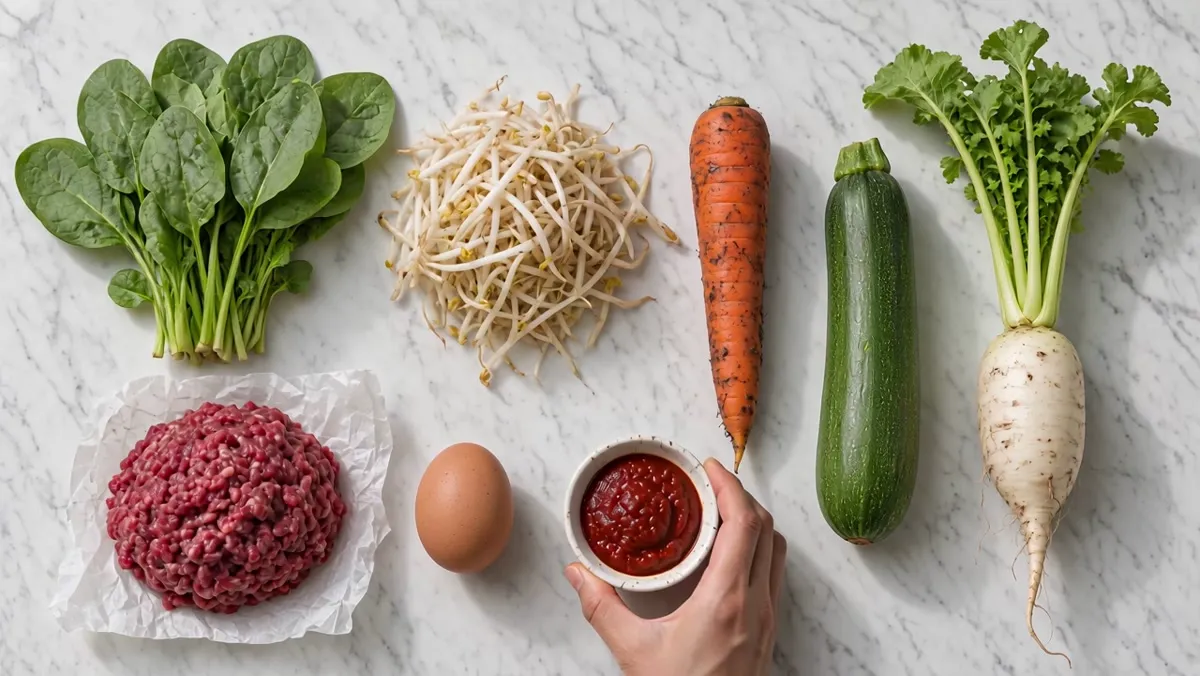
This bibimbap recipe is written for one serving on purpose — it is a weeknight bowl, not a party dish. Scaling up changes nothing about the method — 210g of rice and 80g of each vegetable per person, however many bowls you are making. Only the washing-up grows. Measurements are metric first, with US spoons in brackets: 1 tsp = 5ml, 1 Tbsp = 15ml.
| Ingredient | Amount | Notes & Substitutes |
|---|---|---|
| Warm cooked short-grain rice | 210 g (~1 cup, heaped) | Warm, not wet — see guide 👇 |
| Spinach | 80 g (1 large handful) | Stems on, roots trimmed |
| Soybean sprouts | 80 g (1 large handful) | Mung sprouts work — see guide 👇 |
| Korean radish (mu) | 80 g (~½ cup julienned) | Daikon is the closest swap 👇 |
| Carrot | ½ medium | Cut into matchsticks |
| Korean zucchini (aehobak) | ⅓ | Green zucchini works — see guide 👇 |
| Minced beef | 80 g (~3 oz) | Any lean mince |
| Egg | 1 | Fried, yolk kept runny |
| Cooking oil | as needed | Neutral oil |
| Sesame oil, salt, minced garlic, toasted sesame seeds | to taste | Used throughout |
🥄 The sauce (yangnyeomjang)
| Ingredient | Amount |
|---|---|
| Gochujang (Korean chilli paste) | 2 Tbsp |
| Sesame oil | 1 Tbsp |
| Sugar | ½ Tbsp |
| Minced garlic | a pinch |
| Salt | a pinch |
🥕 Radish namul seasoning
| Ingredient | Amount |
|---|---|
| Gochugaru (Korean chilli flakes) | 1 tsp |
| Vinegar | 1 tsp |
| Sugar | ½ tsp |
| Minced garlic | a pinch |
| Salt | a pinch |
🥩 Beef seasoning
| Ingredient | Amount |
|---|---|
| Soy sauce | 1 tsp |
| Minced garlic | a pinch |
| Sesame oil | a few drops |
🧂 2. Can’t Find Korean Ingredients?
No Korean grocer nearby? Only two items in this bibimbap recipe are genuinely hard to replace, and both have a workable stand-in. Here is what each one tastes like, what to use instead, and — the part recipes usually skip — what NOT to buy when the shelf label looks close enough.
A fermented chilli-and-rice paste: sweet, savoury and only mildly hot, closer to miso than to hot sauce. It carries the whole bowl, so it is worth buying properly.
✅ Substitute: miso plus chilli gets you the texture but not the flavour — treat it as a stopgap, not an equal. An opened tub keeps for months in the fridge.
⚠️ Don’t buy: bottles labelled “gochujang sauce”. Those are pre-diluted for dipping and will thin your sauce out. You want the thick paste in a tub.
Coarser and fruitier than cayenne, with far less raw burn. It seasons the radish rather than setting it on fire.
✅ Substitute: cayenne at about half the amount — so ½ tsp where the table says 1 tsp.
⚠️ Don’t buy: full-strength cayenne measured spoon for spoon. The radish namul turns harsh and the colour goes wrong.
Denser and sweeter than daikon, with a firm snap that survives being tossed with salt and vinegar.
✅ Substitute: daikon is a fine stand-in. If yours is the watery supermarket kind, salt it for 5 minutes and drain before seasoning.
⚠️ Don’t buy: small red salad radishes. Wrong texture, wrong sweetness, and they bleed pink into everything.
Paler and firmer than Italian zucchini, so it holds its shape in the pan.
✅ Substitute: ordinary green zucchini works — just cut it a touch thicker so it doesn’t collapse.
⚠️ Don’t buy: the softest, glossiest courgette on the shelf. Firmer is better here.
Recognisable by the yellow bean head. They stay crunchy after blanching, which is exactly why they are in the bowl.
✅ Substitute: mung bean sprouts, but they are softer — blanch them even more briefly.
⚠️ Don’t buy: the pre-seasoned sprouts sold ready-dressed in tubs. They arrive already flavoured and will fight your own seasoning.
Not exotic, but the most common failure point. It has to be short-grain, warm and slightly firm.
✅ Substitute: sushi rice is the same category and works perfectly.
⚠️ Don’t use: cold rice, which will not carry the sauce, or wet freshly steamed rice, which turns the bowl to porridge.

🍳 3. Bibimbap Recipe — Step-by-Step Instructions
Read the whole sequence once before you turn on the stove. Nine steps sounds like a lot, but four of them take under a minute, and the order exists for a reason: the sauce rests while you work, and the pan gets used three times without being washed in between.
STEP 1🥄 Mix the sauce first
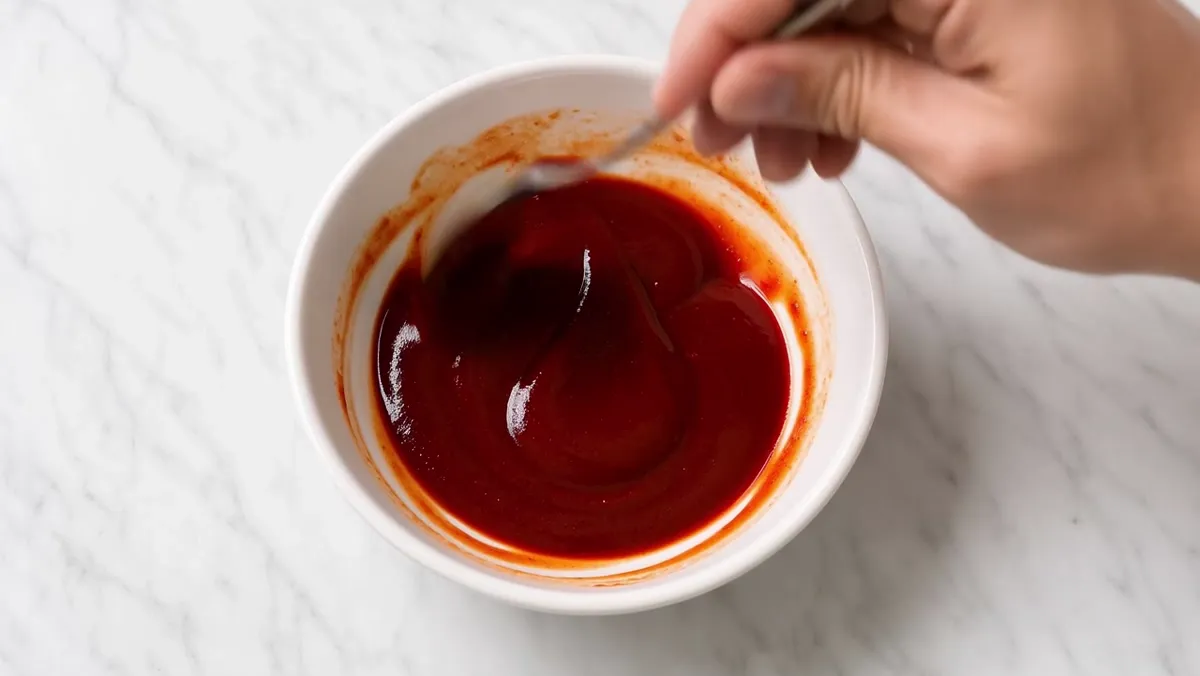
Stir the gochujang 2 Tbsp, sesame oil 1 Tbsp, sugar ½ Tbsp, a pinch of garlic and a pinch of salt together in a small bowl until it turns glossy and smooth. Then set it aside and forget about it. Sauce made first has had twenty minutes for the garlic to soften into it, which is not the same thing as sauce stirred together at the table.
STEP 2🔪 Cut the carrot and the zucchini
Halve the carrot and cut it into long, even matchsticks. Cut the zucchini to the same thickness. This is not about neatness — matchsticks of different sizes cook at different rates, and you are about to fry them in the same pan one after the other on the same timing.
STEP 3🥕 Make the radish namul — with your hand
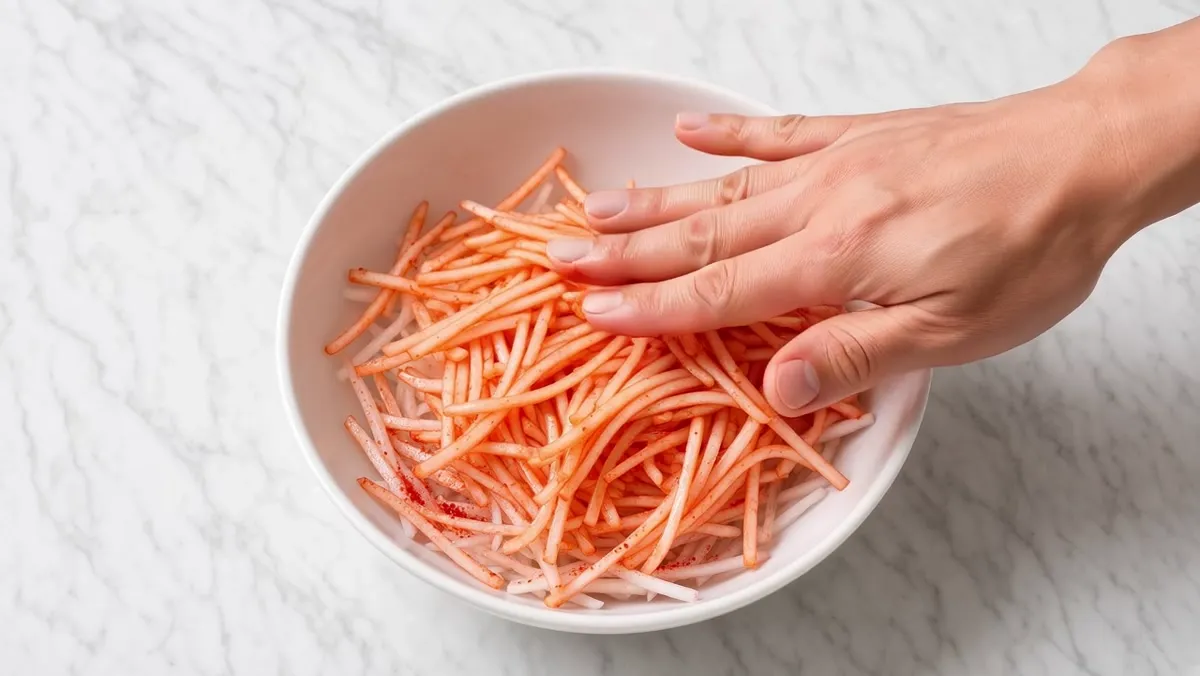
Julienne the radish, then toss it with gochugaru 1 tsp, vinegar 1 tsp, sugar ½ tsp, a pinch of garlic and a pinch of salt. Use your hand, not a spoon. A spoon pushes the seasoning around; a hand works it into every strand. Within a minute or two the radish turns pale pink and releases a little liquid — that is the sign it is ready, and it is the only raw element in the bowl.
STEP 4💧 Blanch the greens — 10 seconds each, separately
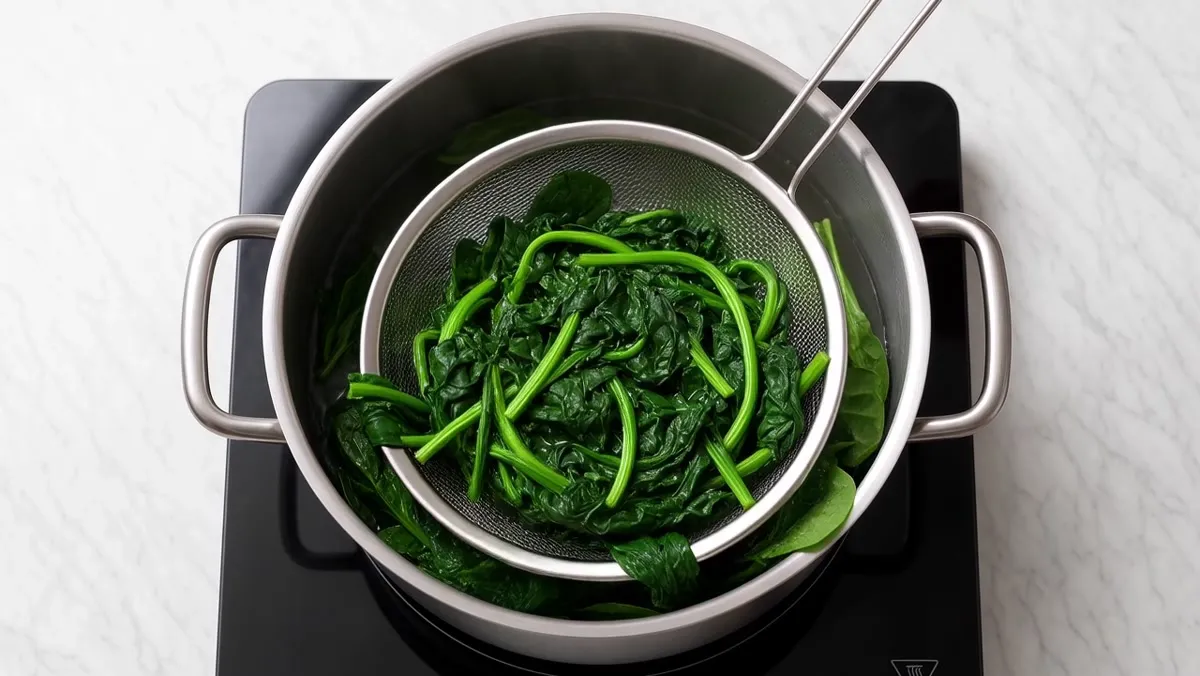
Bring a medium pot of water to the boil, plenty of water, a pinch of salt. Blanch the spinach and the soybean sprouts separately, about 10 seconds each. Ten seconds looks absurdly short and it is the single most important number in this bibimbap recipe. Spinach starts losing its green above roughly 90 seconds of heat; ten seconds sets the colour and leaves some texture in the stem.
STEP 5💪 Squeeze hard, then season each one on its own
Rinse both in cold water and wring out as much water as you can — harder than feels polite. Blanched greens hold several tablespoons of water each, and that water has nowhere to go but into the rice. Then season them separately, each with sesame oil, salt and a little garlic. Two bowls, two seasonings. This is the step that turns boiled vegetables into namul.
STEP 6🍳 Fry the carrot, then the zucchini — in separate batches
Oil in the pan, carrot in, a pinch of salt, and out. Then the zucchini, the same way. It is tempting to do both at once; don’t. Cooked together, the colours bleed into grey, and colour is the one thing a bibimbap bowl is looking at you for. Two batches costs about ninety seconds.
STEP 7🥩 Fry the beef in the same pan
Don’t wash the pan. Add the minced beef with soy sauce 1 tsp, a pinch of garlic and a few drops of sesame oil, and cook it fast and hot until it is just cooked through and glazed. The oil left in the pan is already seasoned from the vegetables, and the beef picks that up.
STEP 8🍳 Fry the egg — and stop early
Sunny-side up, and take it off while the yolk is still runny. This is not a garnish. When you mix the bowl, the yolk is the only thing loosening the thick gochujang sauce, and a hard yolk leaves the whole bowl stiff and dry. If a soft yolk makes you nervous, lid the pan for twenty seconds to set the white and leave the yolk alone.

STEP 9🥣 Build the bowl, then mix it from the bottom up
Warm rice at the bottom. Then the spinach, the soybean sprouts, the radish namul, the carrot, the zucchini and the beef, each in its own section, with the egg in the middle. Look at it for a second, because that arrangement is the point. Then spoon the sauce on, break the yolk, and mix from the bottom up so the rice comes up into the sauce rather than the sauce sitting on top of it. Bibimbap is only bibimbap once it has been mixed — the name says so.
💡 4. Tips for Success
✔ Ten seconds, not one minute. If you take one number away from this bibimbap recipe, take that one. Over-blanched spinach is grey, limp and faintly bitter, and no amount of sesame oil brings it back.
✔ Season the namul while they are still warm. Warm greens take the sesame oil and salt right through; cold ones just wear it on the outside. This is the ordinary Korean home-kitchen habit that most translated recipes leave out.
✔ Separate pans, separate seasoning. Bibimbap is not a stir-fry. Each vegetable is its own small dish, and the mixing happens at the table, not in the pan.
✔ Taste the sauce before it goes on. Gochujang brands vary a lot in salt and sweetness. If yours tastes sharp, another pinch of sugar settles it; if it tastes flat, a few more drops of sesame oil will.
✔ Get the rice right and the rest is forgiving. Short-grain, warm, slightly firm. Rice that is too wet is the one mistake you cannot recover from once the sauce is in.
🥡 5. Storage & Reheating
A mixed bowl does not keep — once the sauce and the yolk are through the rice, it is a meal with a deadline. The components, though, keep well, and that is how Korean home kitchens actually use this bibimbap recipe: the namul are made in a batch and eaten across a couple of days.
- The seasoned namul — airtight containers in the fridge, each one separate. In our kitchen they get eaten within 2 days; after that the spinach starts weeping and the crunch goes out of the sprouts. Bring them back to room temperature before assembling.
- The sauce — it outlasts everything else here; in a small jar in the fridge it is still good 1 week later. Make a double batch while you are at it.
- The rice — reheat until it is properly hot and steaming, then let it stand a moment so the surface is not wet.
- The egg — always fresh. It takes two minutes, and a reheated fried egg is a sad thing.
🍚 6. What to Serve With
Bibimbap is already a complete plate, so what goes beside it is usually something wet and something sharp:
- A light soup — anything clear and mild. The bowl is dense, and a spoonful of broth between mouthfuls resets it 🍲
- Kimchi — the acidity cuts the sesame oil. If you have a jar going, the sour end of it belongs here 🥬
- More gochujang on the side — bowls get mixed to different strengths at the same table, and everyone adjusting their own is normal 🌶
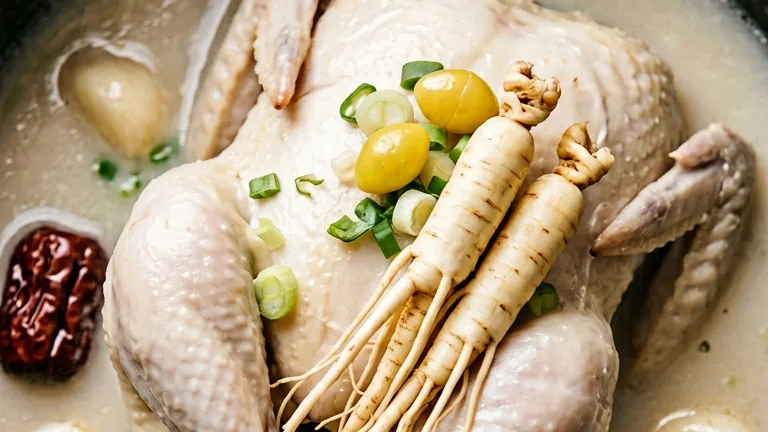
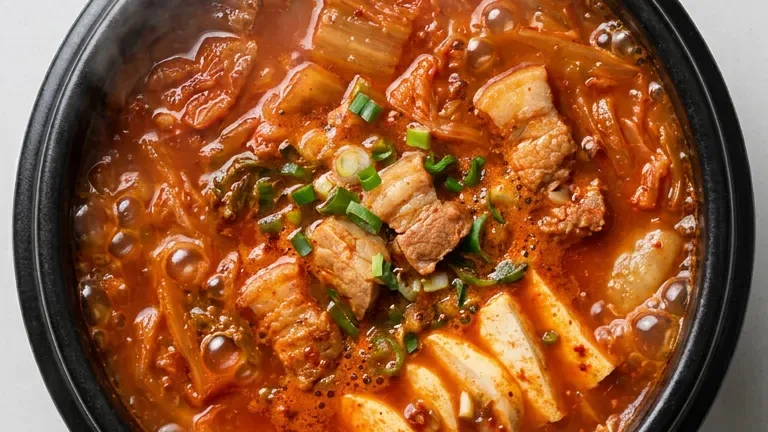
If you want to build a fuller Korean table around it, a bubbling stew is the classic partner — our kimchi jjigae recipe uses the sour kimchi you would otherwise be picking at, and the samgyetang recipe is the mild, milky opposite when the table needs something gentle. For something to eat with your hands alongside there is kimbap, and for a loud, sticky counterpoint, yangnyeom chicken.
❓ 7. FAQ
❓ Can I make this bibimbap recipe without beef?
Yes, and it barely changes the bowl. Drop the beef and put 60g of sautéed shiitake with a splash of soy sauce in its place. Everything else — the namul, the sauce, the egg — stays exactly the same. For a fully vegan bowl, leave the egg out too and add a few extra drops of sesame oil to the sauce so it still loosens when mixed.
❓ Do I really have to cook every vegetable separately?
If you want it to taste like bibimbap, yes. Cooked together, the vegetables trade water and colour and arrive as one grey-green mass. The separation costs about three extra minutes and one extra bowl, and it is the entire reason the dish is built the way it is.
❓ Can I use cold or leftover rice?
Reheat it first. Cold rice does not absorb the sauce, so the gochujang stays as a coating on the outside and the bowl manages to taste bland and too salty at the same time. Warm it through, then let the steam escape for a minute so the grains are hot but not wet.
❓ How spicy is bibimbap?
Mild, by design. Gochujang is more sweet-savoury than hot, and this bibimbap recipe uses 2 Tbsp of it across a single bowl. Start with half the sauce, mix, and add the rest if you want it stronger — which is how it gets eaten anyway.
❓ What is dolsot bibimbap, and can I make it at home?
Dolsot bibimbap is the same bowl served in a heated stone pot, which crisps the rice against the hot sides into a golden crust. You can get close in a small cast-iron pan: oil it, press the warm rice in, and let it sit over medium heat for a few minutes before adding the toppings. There is more on the dolsot stone bowl itself if you are thinking of buying one.
❓ Can I prepare bibimbap ahead for the week?
Partly. The namul and the sauce are genuinely good make-ahead components — that is why they exist in Korean kitchens in the first place. The rice and the egg are not. Prep the vegetables on Sunday and each bowl becomes a two-minute assembly plus one fried egg.
🎨 8. Make It Your Own — Variations & Upgrades
The topping set here — spinach, soybean sprouts, radish, carrot, zucchini, beef, egg — is the home version, trimmed down from the much larger restaurant spread. It is a starting point, not a fixed list:
The whole bibimbap recipe in one breath: mix the gochujang sauce first → cut the carrot and zucchini into matchsticks → hand-toss the radish namul → blanch spinach and sprouts 10 seconds each, squeeze hard, season separately → fry carrot, then zucchini, then beef in the same pan → fry the egg with a runny yolk → build the bowl in sections, sauce on, break the yolk, mix from the bottom up. One bowl, about 30 minutes.
Recipe notes: the measurements and the cooking order follow the home-kitchen method used in our own filmed version of the dish, cross-checked against standard Korean namul practice — short blanch, hard squeeze, sesame oil and salt on each vegetable separately, carrot and zucchini fried apart. Calorie values are approximate. Background reading: bibimbap on Wikipedia, the gochujang entry, and an overview of namul as a dish category.