
Dog Vaccination Schedule: Puppy to Adult Shots by Age (2026)
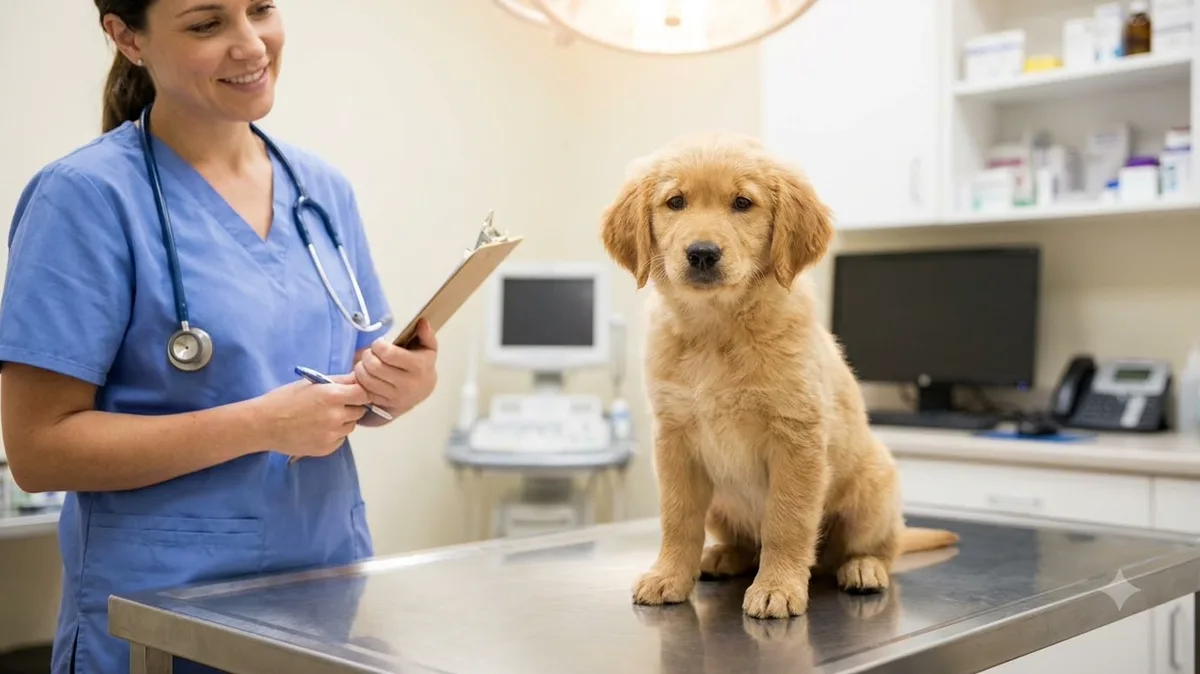
A dog vaccination schedule starts earlier and finishes later than most new owners expect. The AVMA states that the series begins at six to eight weeks of age and that for most puppies the final dose in the series is given at sixteen weeks of age or older. Everything between those two dates is set by your veterinarian and the product label, not by a chart on the internet — and this article is careful about the difference.
I went looking for a single authoritative table and did not find one that is publicly readable. The 2022 AAHA Canine Vaccination Guidelines are the reference North American veterinarians work from, but the detailed dosing pages sit behind a member login. So this guide reports exactly what the public guideline summary says, flags one change from 2024 that many older articles miss, and marks clearly where the answer has to come from your clinic.
Core vaccines for every dog, per AAHA: distemper, adenovirus, parvovirus (with or without parainfluenza), leptospira and rabies. The puppy series starts at 6 to 8 weeks and the last dose lands at 16 weeks or later, per the AVMA. After the series, the AVMA notes that many vaccines give adequate immunity when given every few years.
Rabies is different from the rest: the AVMA points out that many local and state laws require certain vaccinations, even for indoor-only pets, so the interval for that one is a legal question in your jurisdiction as well as a medical one.
💉 What the current dog vaccination schedule covers
1-1. 📅 The 2024 change most articles missed
The reference document is the 2022 AAHA Canine Vaccination Guidelines, published on 15 August 2022. The important detail is the note AAHA added afterwards: the guidelines were updated in 2024 to include leptospirosis as a recommended core vaccine for all dogs. Before that change, leptospirosis was widely treated as a lifestyle vaccine for dogs with water or wildlife exposure.
If you are reading an older dog vaccination schedule — including plenty still ranking well — it will almost certainly list leptospirosis as optional. That is the single most common way a schedule found online is now out of date, and it is worth raising at your next appointment rather than assuming your clinic has already adjusted.
1-2. 🧾 What “core” means in practice
AAHA’s summary says all dogs should have distemper, adenovirus and parvovirus, with or without parainfluenza, plus leptospira and rabies. It then adds a second tier that it describes as just as essential for some dogs based on their lifestyle and risk. The guideline’s framing is worth quoting because it changes how you should read any schedule: core for an individual patient means the vaccines required for all dogs plus the ones required by that dog’s lifestyle and risk factors.
In other words there is no such thing as a finished dog vaccination schedule in the abstract. A city apartment dog and a farm dog that swims in ponds have the same core list and genuinely different complete lists.
🐶 The puppy series, week by week
2-1. 🗓️ The two dates that are published
Two anchor points come straight from the AVMA’s owner-facing guidance. First: to give the best protection during the first few months of life, a veterinarian will recommend a series of vaccinations starting at six to eight weeks of age. Second: for most puppies and kittens, the final vaccination in the series is given at sixteen weeks of age or older.
That second date is the one people cut short. The series is not finished because a puppy has had “its shots” at ten weeks; it is finished when the last dose falls at or after sixteen weeks, which is when maternal antibody interference has faded enough for the vaccine to reliably take.
| Stage | What is published | Who sets it |
|---|---|---|
| First dose | Starts at 6 to 8 weeks AVMA | Your veterinarian |
| Middle doses | A series — interval not published for owners | Product label + clinic |
| Final puppy dose | 16 weeks or older AVMA | Your veterinarian |
| After the series | Adequate immunity every few years AVMA | Vaccine specific |
| Rabies | Often required by law AVMA | Your jurisdiction |
Only rows with a named source are quoted from a published guideline. The blank row is deliberate: the interval between middle doses is not something I could verify from a publicly readable primary source, so I am not going to invent a number for it.
2-2. 🚸 Socialisation happens during the gap
The awkward truth about the window between the first dose and sixteen weeks is that it overlaps almost exactly with the period when a puppy most needs to meet the world. There is no version of a dog vaccination schedule that resolves that tension for you; it is a risk conversation, and the sensible version of it happens with your veterinarian, who knows what is circulating locally.
What you can do without guessing is write the dates down. Take a photo of the vaccination record at every visit. A puppy that changes households — breeder to owner, or shelter to foster to adopter — very often loses its paperwork, and a lost record is the most common reason a series gets restarted.
Build your dog’s dates with the free vaccination schedule tool →
Ad
 Torriden Dive In Hyaluronic Acid Serum5% off with code JXLAB0306View details ›
Affiliate link — I may earn a commission.
🧬 Core versus lifestyle vaccines
3-1. 📋 The two lists, as published
AAHA’s public summary splits the vaccines into a list for all dogs and a list driven by lifestyle and risk. Reproduced below as written, without additions.
| Core — all dogs | Lifestyle and risk based |
|---|---|
| Distemper | Lyme disease |
| Adenovirus | Bordetella |
| Parvovirus, with or without parainfluenza | Canine influenza |
| Leptospira (added as core in 2024) | Rattlesnake toxoid |
| Rabies | — |
3-2. 🗺️ Why the second column is geography
Look at that right-hand column again and you will notice it is mostly a map. Rattlesnake toxoid is meaningless in most of the country and relevant in parts of the southwest. Lyme disease tracks tick populations. Canine influenza follows boarding, daycare and show circuits. Bordetella is a group-housing question.
This is the part of a dog vaccination schedule that no chart can fill in, because it depends on where you live and what your dog does. AAHA’s own guidance is to ask, for every patient, what should be added to the core vaccines for this dog. That is a better question than asking which shots are “necessary”.
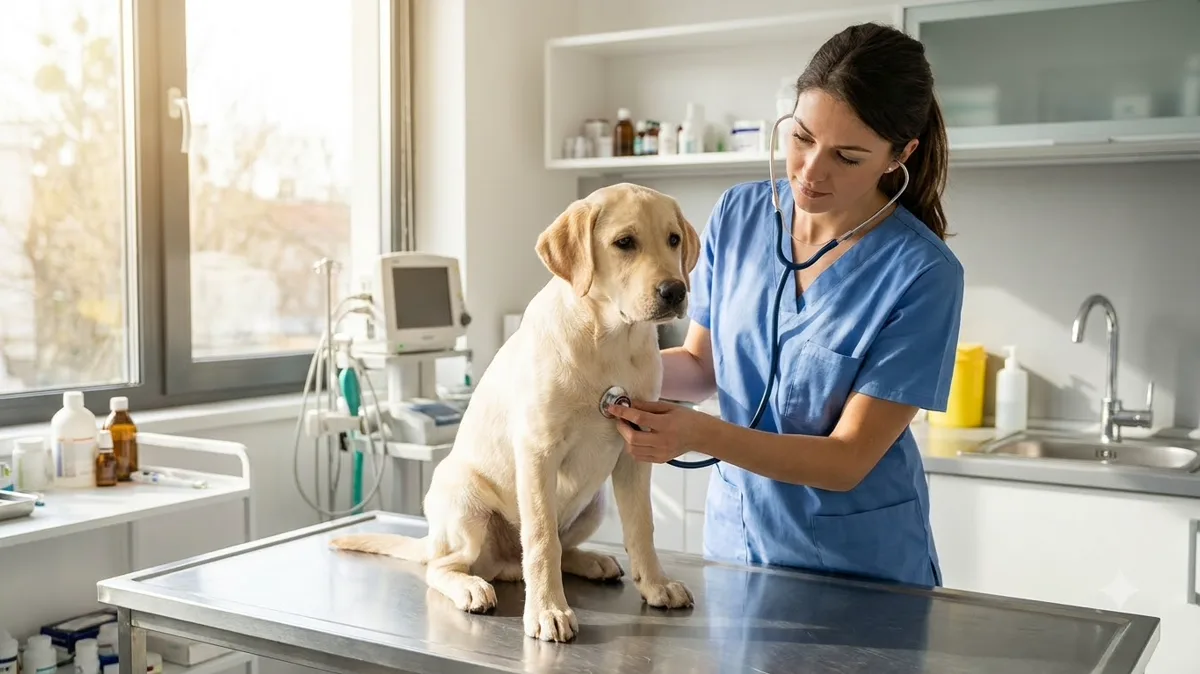
🔁 Boosters, gaps and overdue dogs
4-1. ⏳ “Every few years” is as precise as it gets publicly
The AVMA’s phrasing for adult dogs is that after the initial puppy series is complete, many vaccines provide adequate immunity when given every few years. That is deliberately non-specific, and I am not going to sharpen it into “every three years” — the interval is set per vaccine and per product, and the label your clinic uses is the authority.
Practically, this means the useful thing to ask at an annual exam is not “is my dog due?” but “which of these is due, and on what interval does this product run?” Two dogs in the same waiting room can be on different schedules for the same disease.
4-2. 🤔 The overdue dog, and my one strong opinion
AAHA gives an unusually plain instruction for the case everybody actually faces — a rescue with no paperwork, or a dog whose booster slipped by a year. When vaccines are overdue or unknown, it says, consider that the benefits of vaccinating outweigh the risks in most cases, and offers the rule of thumb: when in doubt, vaccinate.
My opinion, and it is an opinion: the biggest avoidable failure in a dog vaccination schedule is not choosing wrong, it is losing the record. I have watched an adopted dog get a full restart because a shelter’s printout went missing in a move. Photograph the record at every visit and keep it somewhere you will still be able to find in three years. That habit costs nothing and removes the most common reason for redundant medicine.

⚖️ Rabies, the law and record-keeping
5-1. 🏛️ A legal requirement, not only a medical one
Rabies sits in a category of its own on any dog vaccination schedule. The AVMA states that many local and state laws require certain vaccinations, and adds the part owners often miss: even for indoor-only pets. Because the requirement is statutory, the interval and the documentation are set where you live rather than by a national guideline.
The consequences of a lapse are also administrative rather than only clinical. Boarding facilities, groomers, daycares, apartment buildings, international travel and — in many places — licensing all ask for a current rabies certificate. An out-of-date one can cancel a trip.
5-2. 🗂️ What to keep, and where
Keep three things: the rabies certificate, the full vaccination history with dates and product names, and the microchip number. Store them as photographs somewhere you actually revisit, not only in a folder at home. If you move clinics, hand over the history rather than describing it from memory — product names matter because intervals differ by product.
If your dog’s diet or weight is changing at the same time as its vaccine schedule, which is common in the first year, it is worth running both together. The feeding calculator below uses the same weight you will be reading off the clinic scale.
❓ Dog vaccination schedule FAQ
6-1. ❓ When do puppy vaccinations start and finish?
The AVMA says the series starts at six to eight weeks of age, and that for most puppies the final vaccination in the series is given at sixteen weeks of age or older. The number of doses in between, and the spacing, are set by your veterinarian and the specific product, so ask for the plan in writing at the first visit.
6-2. ❓ Which vaccines are core for every dog?
Per AAHA’s guideline summary: distemper, adenovirus, parvovirus with or without parainfluenza, leptospira, and rabies. Leptospirosis moved onto that list in the 2024 update, so any dog vaccination schedule written before then will look different from a current one.
6-3. ❓ Does an indoor dog need a rabies vaccine?
Very likely, and for legal reasons as much as medical ones. The AVMA states that many local and state laws require certain vaccinations even for indoor-only pets. Check your own jurisdiction’s rule, because the requirement and the interval are set locally rather than nationally.
6-4. ❓ My dog’s boosters are overdue — what now?
Book the appointment. AAHA’s guidance is that when vaccines are overdue or unknown, the benefits of vaccinating outweigh the risks in most cases, summarised as “when in doubt, vaccinate”. Bring whatever record you do have, even a partial one, because it may shorten what needs repeating.
6-5. ❓ How often are adult boosters needed?
The AVMA says many vaccines provide adequate immunity when given every few years after the initial series. The exact interval is vaccine-specific and product-specific, and rabies may be fixed by law where you live, so treat any single number you read online as a prompt to ask rather than an answer.
Core for every dog: distemper, adenovirus, parvovirus with or without parainfluenza, leptospira and rabies — with leptospirosis added as core in the 2024 update to the 2022 AAHA guidelines. The puppy series starts at 6 to 8 weeks and the final dose falls at 16 weeks or later. After that, many vaccines run on a multi-year interval that depends on the product. Rabies is often required by local or state law even for indoor-only dogs. Photograph the record every single visit.
Open the vaccination schedule tool and map your dog’s dates →
Ad
Torriden Dive In Hyaluronic Acid Serum5% off with code JXLAB0306View details ›
Affiliate link — I may earn a commission.
📚 Sources and disclaimer
7-1. 🔗 What was cited above
AAHA — 2022 Canine Vaccination Guidelines (published 15 Aug 2022, updated 2024)
AVMA — Vaccinations: what pet owners should know
WSAVA — Vaccination Guidelines
AAFP — Feline practice guidelines (for the cat equivalent)
AVMA — Household Hazards
7-2. 🩺 Disclaimer
This article is general information, not veterinary advice. Guidance from AAHA, the AVMA and WSAVA is reported as published, and where a detail is not publicly available it is marked as such rather than filled in. Vaccine choice, dosing intervals and legal requirements depend on your dog, your product and your jurisdiction, so the schedule that applies to your dog is the one your veterinarian writes. If your dog shows a reaction after a vaccination, contact the clinic immediately rather than waiting to see whether it settles.